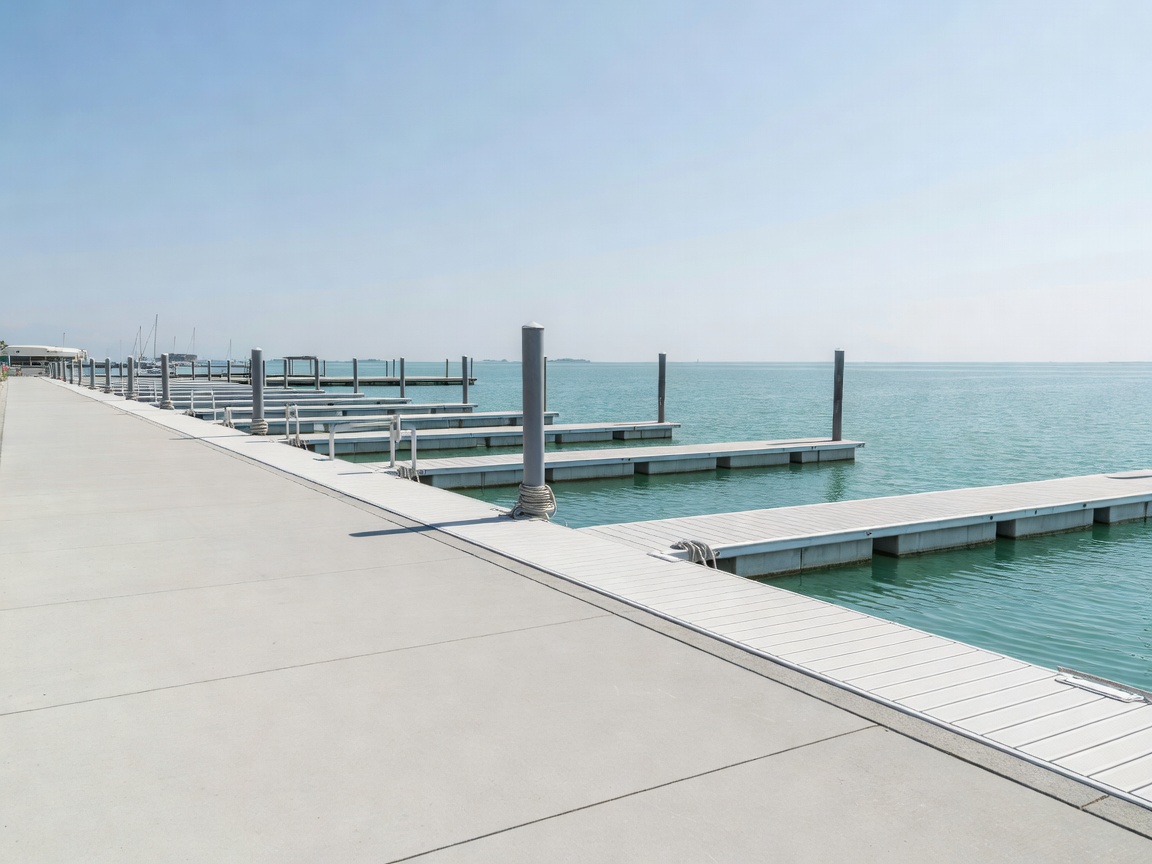
Keep circulation visible
Walkways connect gates, ramps, berths, service points and shore access. Their condition affects presentation and daily movement. Cleaning plans should identify the full route, not only the most visible entrance.
Surface contamination may include leaf matter, mud, salt residue, algae awareness and tracked debris. Wet-weather conditions can change appearance and use quickly. Cleaning alone does not guarantee safety; local procedures, inspection and user behaviour remain relevant.
High-traffic areas need a clear cycle
Prioritise boarding points, corners, transitions, ramps and areas where people stop. Compare high-traffic sections with quieter routes. Recurring schedules should record date, area, visible condition and any issue referred for further review.
Seasonal differences matter. Autumn debris can block or obscure surfaces. Summer use can increase residue and traffic. Winter moisture, reduced light and storms can change access planning.
Work around fixed infrastructure
Cleaning around bollards, cleats, ladders, utility cabinets and gates requires controlled access. Confirm the work window and protect equipment according to site procedures. Electrical equipment and specialist infrastructure must not be treated as ordinary cleaning targets.
Operational continuity is easier when the route is divided into manageable sections. Clear communication helps users understand temporary restrictions. Do not create a route plan that depends on unsafe access or unverified conditions.
Presentation and records
Presentation standards should be stated in observable terms: clear route, controlled debris, visible transitions and documented exceptions. Photographs may support records when handled appropriately, but they do not replace inspection.
Walkway checklist
- Map the route from shore access to working areas.
- Identify high-traffic and wet-weather priority zones.
- Record fixed infrastructure and access constraints.
- Schedule recurring cleaning with clear handover notes.
- Refer structural, electrical or unusual conditions.
What to monitor
Monitor recurring contamination, blocked drainage, damaged transitions, loose boards, changing wet areas and route obstructions. Maintain inspection records that distinguish cleaning observations from specialist findings.