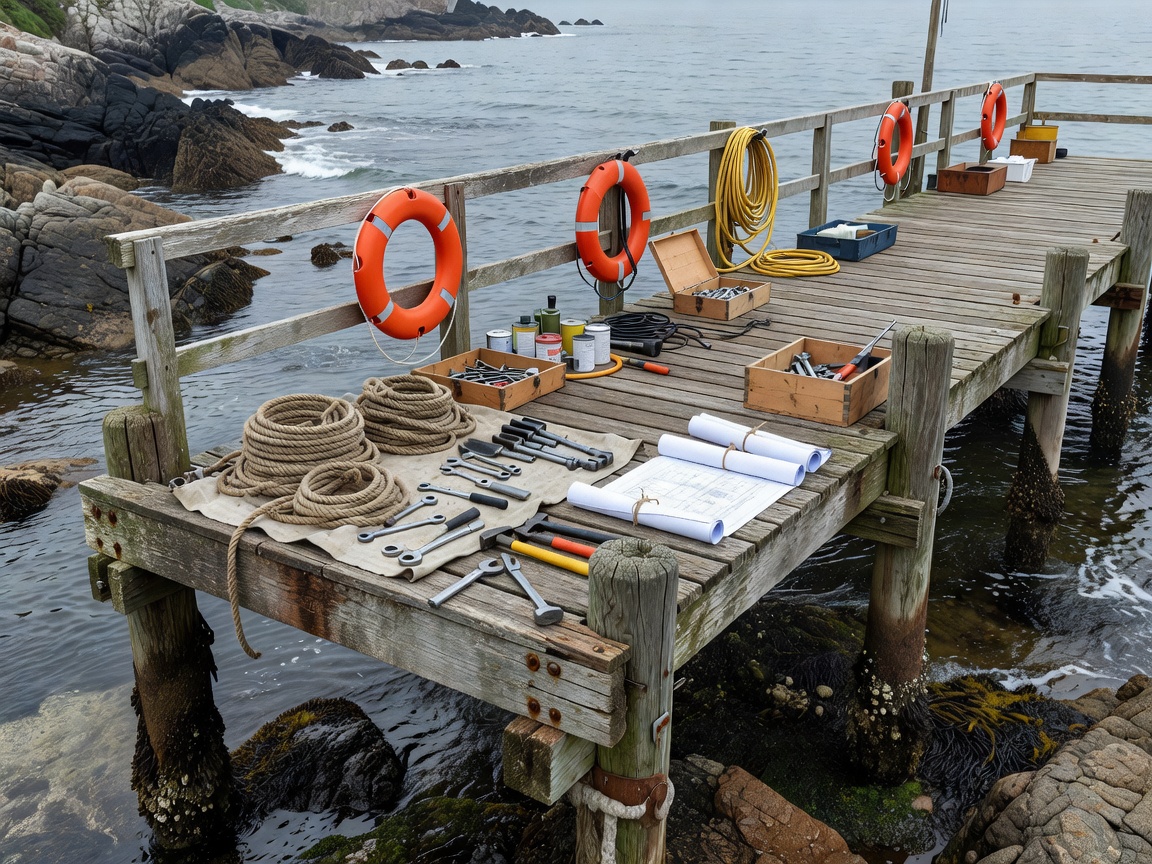
Spring preparation
Spring planning should review winter exposure, accumulated debris, moisture patterns and access conditions. Clean visible surfaces before recording their baseline condition. Confirm that routes, edges and transitions can be approached under the site’s procedures.
Spring is a useful point to separate routine cleaning from items needing qualified review. Storm effects, damaged decking, shifted components or unusual waterline changes should not be treated as ordinary dirt.
Summer cleaning cycles
Summer often brings more pedestrian movement, service activity and surface contact. Use recurring cleaning windows that reflect actual traffic. Prioritise boarding points, high-use walkways, shared access and areas where residue returns quickly.
Warm weather does not remove the need for material awareness. Timber, composite, metal and coated surfaces still require compatible methods. Access planning should account for users, vessels, weather and any temporary restriction.
Autumn debris and winter exposure
Autumn planning focuses on leaves, organic matter, drainage and surfaces that become obscured. Record areas where debris collects and establish a practical review after significant weather.
Winter exposure can include moisture, reduced light, storms and changing water levels. Cleaning schedules may need adjustment. Do not work around unstable structures, electrical systems, moorings or unsafe access without qualified personnel and site controls.
Storm-related observations
After notable weather, document visible changes to surfaces, edges, fittings, access routes and debris patterns. A visual note is not a structural assessment. Suspected movement, damage or instability should be referred through the appropriate site process.
Prioritisation and readiness
Prioritise by access importance, visible change, recurrence and operational impact. Keep a simple record of area, date, condition, action and referral. Pre-season readiness means the planned work is understood, access is available and unresolved concerns are visible to the responsible team.
Seasonal checklist
- Set spring, summer, autumn and winter review points.
- Record debris, moisture and changing contamination.
- Review access before each planned work window.
- Document storm-related observations separately.
- Refer engineering, electrical and structural concerns.
What to monitor
Monitor recurring deposits, drainage, surface change, damaged transitions, waterline marks and seasonal access constraints. General planning cannot define site-specific engineering requirements.